
Blog
Offline vs Wi-Fi Data Logger: Which One Should You Choose?

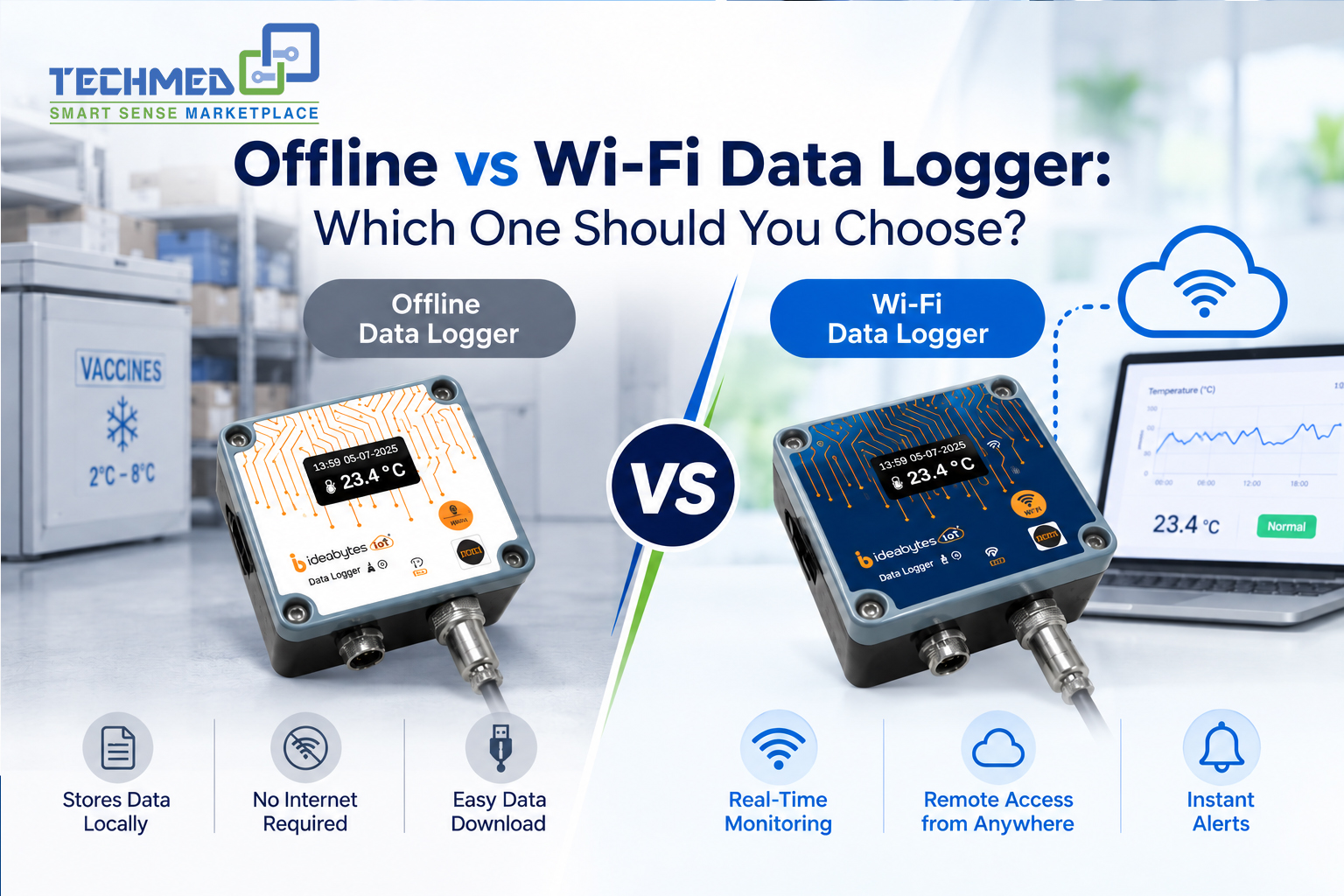
Temperature monitoring is important in laboratories, pharmaceutical storage, hospitals, cold rooms, warehouses, and industrial facilities. When choosing a temperature data logger, one common question is whether to select an offline data logger or a Wi-Fi data logger.
Both can record temperature data, but the main difference is how the data is accessed and monitored.
What Is an Offline Data Logger?
An offline data logger records temperature and stores the readings in its internal memory.
It does not require an internet connection to record data. After the monitoring period, the stored data can be downloaded or transferred for analysis.
Offline data loggers are useful when:
- Internet connectivity is unavailable
- Periodic data collection is sufficient
- The monitoring location is remote
- Continuous remote monitoring is not required
- A simple and cost-effective solution is preferred
For example, a laboratory can place an offline data logger inside a refrigerator and download the recorded temperature data when required.
What Is a Wi-Fi Data Logger?
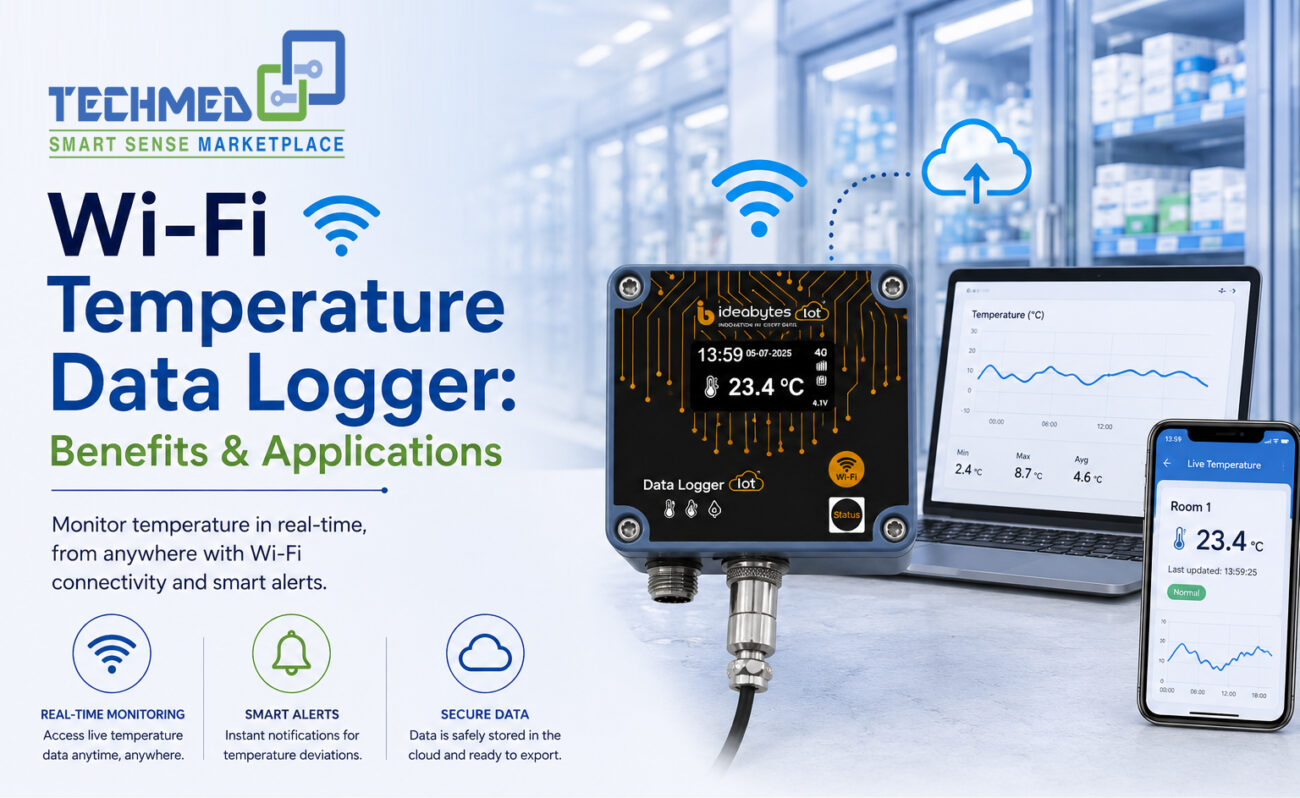
A Wi-Fi data logger records temperature and can transmit the readings through a Wi-Fi network.
Instead of waiting until someone physically retrieves the device, users can monitor temperature remotely, depending on the system and software.
Wi-Fi data loggers are particularly useful when real-time visibility is important.
They can be used for:
- Pharmaceutical storage
- Hospitals
- Laboratories
- Cold rooms
- Refrigerators and freezers
- Warehouses
- Industrial facilities
Offline vs Wi-Fi Data Logger
| Feature | Offline Data Logger | Wi-Fi Data Logger |
|---|---|---|
| Temperature recording | ✓ | ✓ |
| Internet required for recording | No | No |
| Remote monitoring | No | ✓ |
| Real-time data access | Limited | ✓ |
| Automatic data transmission | No | ✓ |
| Temperature alerts | Usually limited | Available on supported systems |
| Historical data | ✓ | ✓ |
| Setup complexity | Simple | Moderate |
| Best for | Periodic monitoring | Continuous remote monitoring |
Which Data Logger Is Better?
There is no single answer. The right option depends on your application.
Choose an Offline Data Logger If:
You only need to record temperature and review the data periodically.
For example, if staff can visit a storage area regularly and download the data manually, an offline logger may be sufficient.
It can also be a practical choice where reliable Wi-Fi connectivity is not available.
Choose a Wi-Fi Data Logger If:
You need to monitor temperature remotely and want faster visibility when conditions change.
A Wi-Fi system can continuously transmit temperature readings and, depending on the setup, generate alerts when the temperature crosses a predefined limit.
This can be especially useful for critical storage environments.
Benefits of Offline Data Loggers
Offline loggers offer:
- Simple operation
- No internet dependency for recording
- Easy deployment
- Historical temperature records
- Lower connectivity requirements
- Suitable for portable monitoring
They are a good option for applications where immediate remote access is not necessary.
Benefits of Wi-Fi Data Loggers
Wi-Fi data loggers provide additional connectivity features, such as:
- Remote temperature monitoring
- Automatic data transmission
- Real-time visibility
- Temperature alerts
- Centralized monitoring
- Easier access to historical data
These features can help reduce the need for manual temperature checks.
What About 4G Data Loggers?
Wi-Fi is not always available in every location. For remote facilities, transportation, warehouses, or other areas without reliable Wi-Fi, a 4G temperature data logger can be an alternative.
4G-enabled devices use cellular connectivity to transmit temperature information remotely.
This makes them useful when monitoring needs to continue outside a standard Wi-Fi network.
How to Choose the Right Data Logger?
Before choosing between an offline and Wi-Fi data logger, consider:
1. Connectivity: Is reliable Wi-Fi available at the monitoring location?
2. Monitoring requirements: Do you need remote or real-time monitoring?
3. Alerts: Do you need immediate notification when temperature limits are exceeded?
4. Data access: How frequently do you need to access temperature records?
5. Location: Is the logger being used in a fixed facility or during transportation?
6. Number of monitoring points: For multiple locations, consider a multi-channel monitoring solution.
Conclusion
Both offline and Wi-Fi data loggers are useful for temperature monitoring, but they are designed for different requirements.
An offline data logger is suitable when you need reliable temperature recording and periodic data collection without internet connectivity.
A Wi-Fi data logger is better when you need remote access, automatic data transmission, and real-time temperature visibility.
For applications requiring monitoring outside Wi-Fi coverage, a 4G temperature data logger can provide another connectivity option.
The best choice ultimately depends on your application, connectivity, monitoring frequency, temperature range, and alert requirements.