
Blog
Cold Chain Monitoring Solutions for Healthcare in Delhi

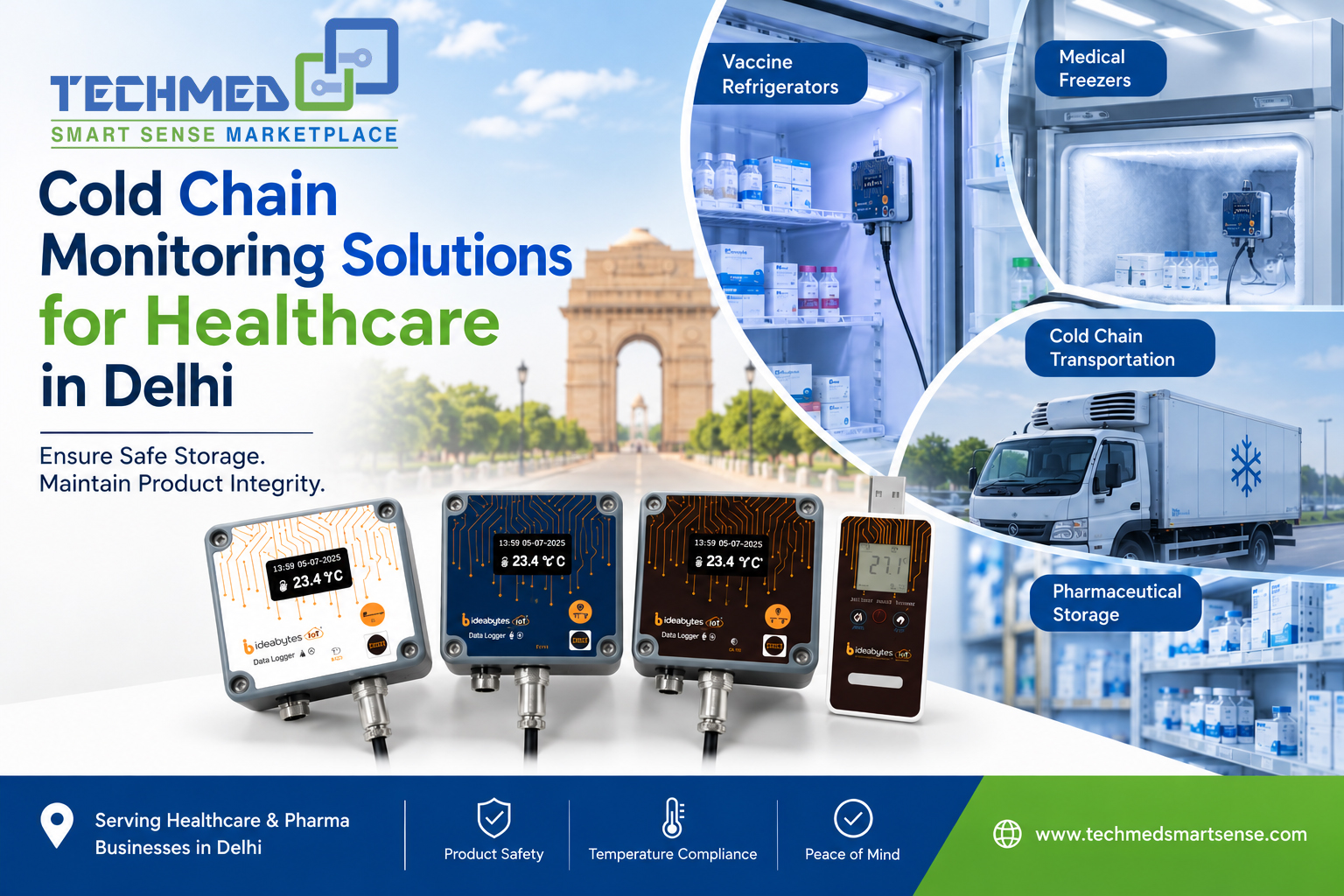
Temperature control is an important part of healthcare supply chains in India. Vaccines, medicines, blood products, laboratory samples, and other temperature-sensitive products may require controlled storage and transportation conditions.
A reliable cold chain monitoring solution helps healthcare organizations continuously track temperature and identify temperature changes before they affect sensitive products.
What Is Cold Chain Monitoring?
Cold chain monitoring is the process of continuously measuring and recording temperature throughout the storage and transportation of temperature-sensitive healthcare products.
A cold chain can include:
- Medical refrigerators
- Freezers
- Cold rooms
- Warehouses
- Insulated boxes
- Refrigerated vehicles
- Pharmaceutical storage facilities
Temperature data loggers and monitoring systems help maintain visibility throughout these different stages.
Why Is Cold Chain Monitoring Important in Healthcare?
Temperature-sensitive healthcare products can be affected by unsuitable storage conditions.
For example, a refrigerator malfunction, power failure, door being left open, or transportation delay can cause an unexpected temperature change.
Without continuous monitoring, these events may go unnoticed.
A temperature monitoring system can automatically record temperature at regular intervals and help staff identify temperature excursions quickly.
This provides better visibility compared with manually checking and recording temperature readings.
Key Features of a Cold Chain Monitoring Solution
A modern cold chain monitoring system can provide several useful features.
Continuous Temperature Recording
Temperature data loggers automatically record readings at predefined intervals. This creates a historical record that can be reviewed when required.
Real-Time Monitoring
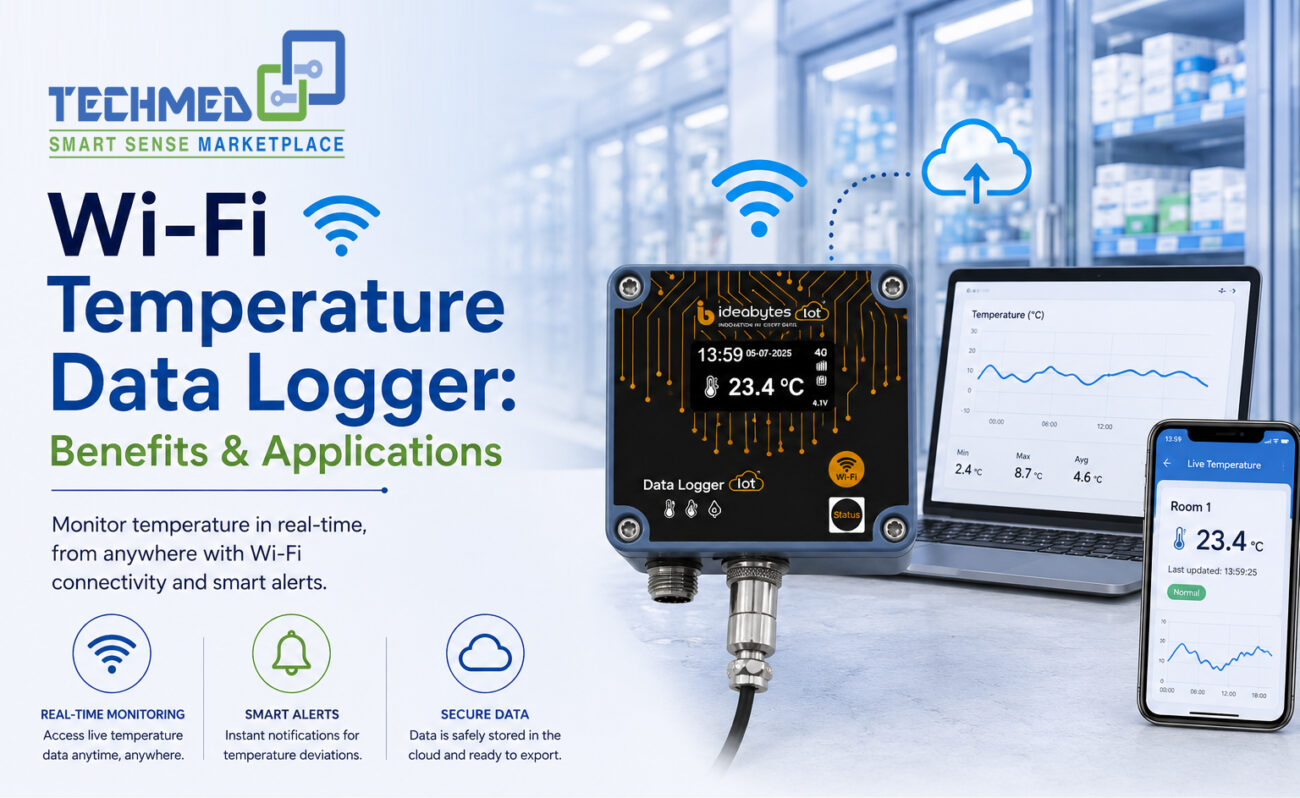
Wi-Fi and 4G-enabled temperature monitoring devices can transmit temperature information remotely, allowing staff to check conditions without being physically present at the storage location.
Temperature Alerts
If the temperature crosses a predefined limit, an alert can notify the responsible team so that corrective action can be taken quickly.
Data Storage and Reports
Recorded data can be stored and analyzed to understand temperature trends and identify unusual changes.
Multiple Sensor Monitoring
Multi-channel systems can monitor several temperature points using multiple sensors. This can be useful for larger refrigerators, cold rooms, warehouses, and healthcare facilities.
Where Can Cold Chain Monitoring Be Used?
Pharmaceutical Storage
Pharmaceutical warehouses and storage facilities can use temperature data loggers to continuously monitor storage conditions.
Vaccine Refrigerators
Vaccine storage requires reliable temperature monitoring. A data logger can record temperature continuously and help identify temperature excursions.
Hospitals and Clinics
Hospitals can use temperature monitoring systems for medical refrigerators, freezers, laboratories, and other temperature-sensitive storage areas.
Laboratories
Laboratories may need to monitor refrigerators, freezers, incubators, and sample storage equipment. Continuous recording provides a temperature history that can be reviewed when necessary.
Healthcare Transportation
During transportation, temperature conditions can change because of delays, equipment problems, or environmental conditions. Portable temperature data loggers can record temperature throughout the journey.
Wi-Fi and 4G Cold Chain Monitoring
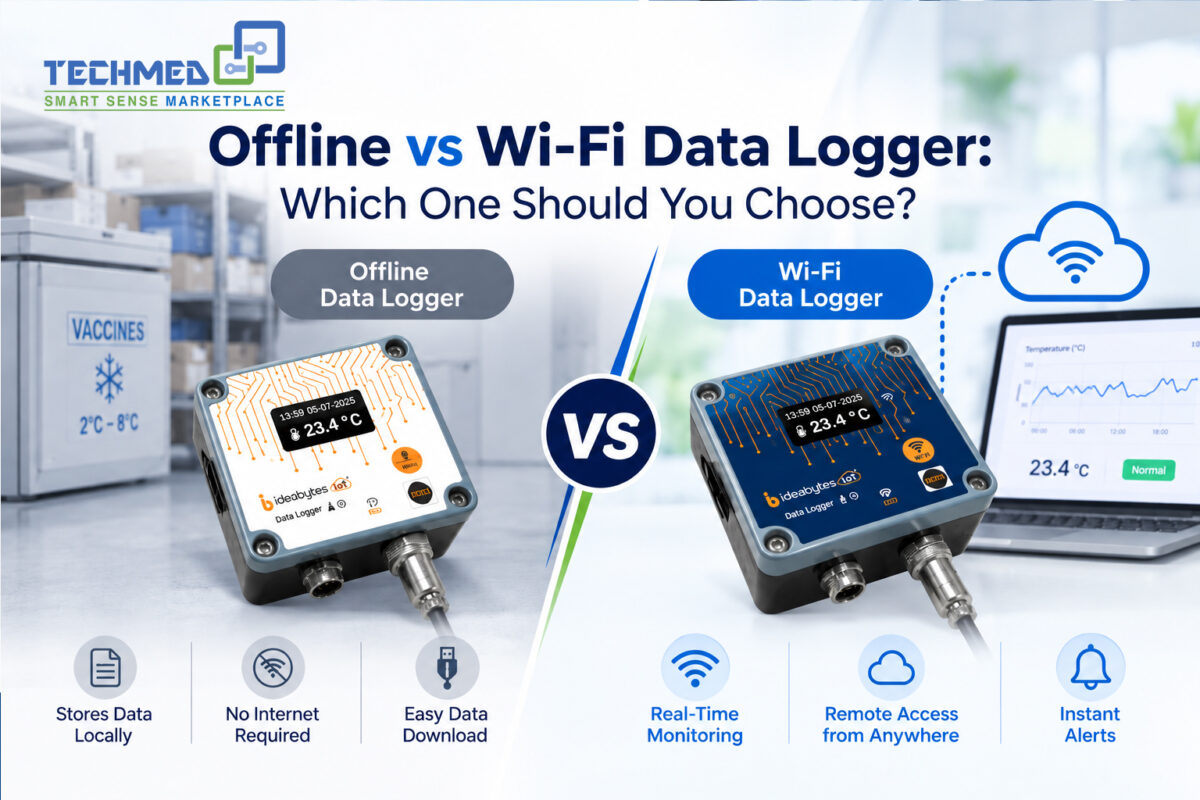
Traditional data loggers require users to retrieve the device or download stored data periodically.
For applications requiring remote visibility, Wi-Fi temperature data loggers can transmit information through an available wireless network.
Where Wi-Fi is unavailable, a 4G temperature data logger can provide cellular connectivity for remote monitoring.
These connected solutions can help healthcare teams monitor temperature conditions from another location and receive alerts when predefined limits are exceeded.
Benefits of Cold Chain Monitoring Solutions
A reliable monitoring system can help healthcare organizations:
- Continuously monitor temperature
- Reduce manual temperature recording
- Detect temperature excursions quickly
- Maintain historical temperature records
- Monitor storage and transportation conditions
- Access temperature information remotely
- Improve visibility across multiple locations
- Make faster decisions when problems occur
How to Choose the Right Cold Chain Monitoring System
Before selecting a solution, consider the following factors:
Temperature range: Choose a device suitable for the required storage or transportation temperature.
Accuracy: Select a logger with appropriate measurement accuracy for your application.
Connectivity: Decide whether you need offline recording, USB, Wi-Fi, or 4G connectivity.
Recording interval: Check how frequently the device can record temperature.
Alerts: For critical applications, choose a system that can provide alerts when temperature limits are exceeded.
Number of channels: Multi-channel devices can be useful when monitoring several locations simultaneously.
Data access: Consider how easily temperature records can be viewed, downloaded, analyzed, and reported.
Conclusion
Cold chain monitoring is an important part of maintaining temperature-sensitive healthcare products during storage and transportation.
From vaccine refrigerators and pharmaceutical warehouses to laboratories and healthcare transportation, temperature data loggers and connected monitoring systems provide continuous visibility into temperature conditions.
For healthcare organizations in India, the right cold chain monitoring solution depends on the application, temperature range, accuracy, connectivity, recording requirements, and need for remote alerts.
TechMedSales provides temperature monitoring and data logging solutions designed for healthcare, pharmaceutical, laboratory, cold storage, and other temperature-sensitive applications.