
Blog
Temperature Data Logger vs Temperature Sensor: What’s the Difference?

Temperature monitoring is important for laboratories, hospitals, pharmaceutical storage, cold storage, warehouses, and industrial facilities. If you are looking for a temperature data logger in Delhi, you may come across another common product: a temperature sensor.
Although both are used for measuring temperature, they perform different functions. Understanding the difference can help you select the right solution for your application.
What Is a Temperature Sensor?
A temperature sensor is a device that detects and measures temperature.
It measures the temperature of its surroundings and sends the reading to another device or monitoring system. Sensors are commonly used in refrigeration systems, HVAC equipment, industrial machines, automation systems, and IoT applications.
Common types include:
- Thermistors
- RTD/PT100 sensors
- Digital temperature sensors
- Temperature probes
A sensor can tell you the temperature, but by itself it generally does not provide long-term temperature data storage.
What Is a Temperature Data Logger?
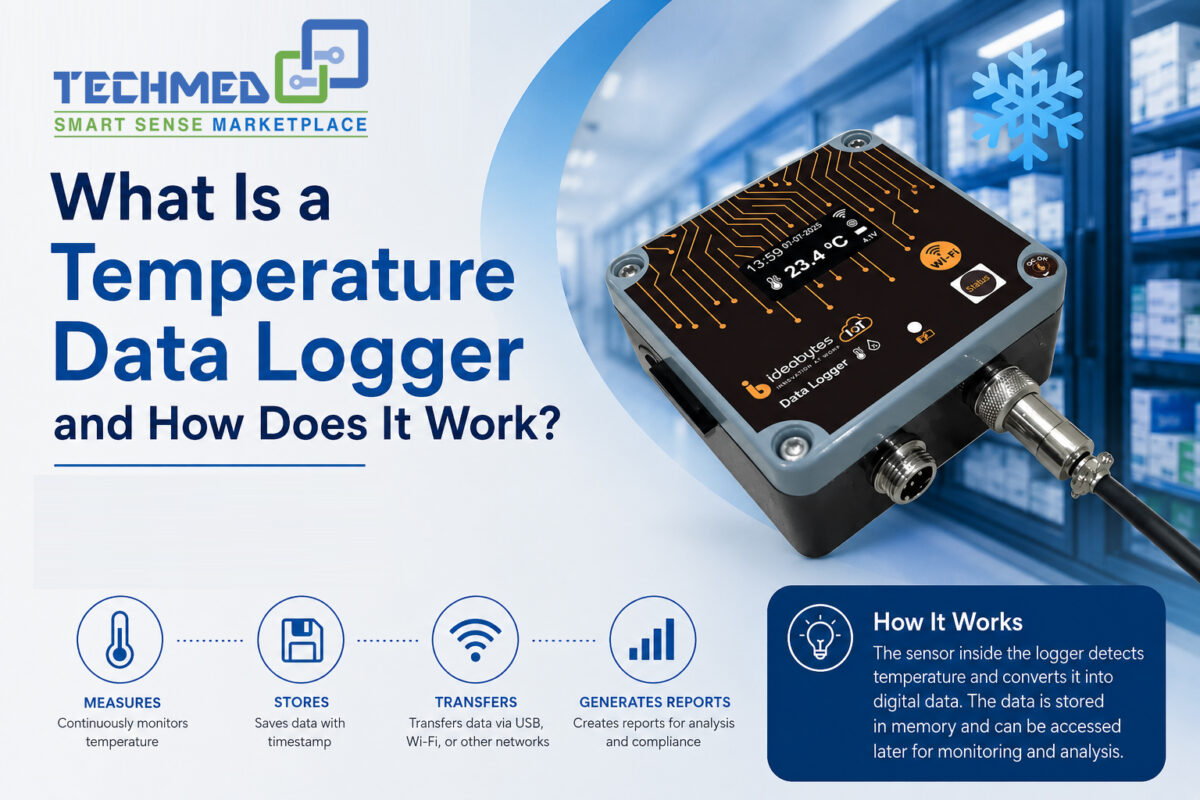
A temperature data logger is a device designed to measure and record temperature over a period of time.
It collects readings at predefined intervals and stores them in its memory. Depending on the model, the data can be downloaded through USB or transmitted using Wi-Fi, 4G, or other connectivity options.
This makes a data logger useful when you need to maintain a historical record of temperature conditions.
For example, a refrigerator may currently show 5°C. A thermometer or sensor can provide that current reading. A data logger can show how the temperature changed over the previous 24 hours, several days, or longer.
Temperature Sensor vs Temperature Data Logger
The simplest difference is:
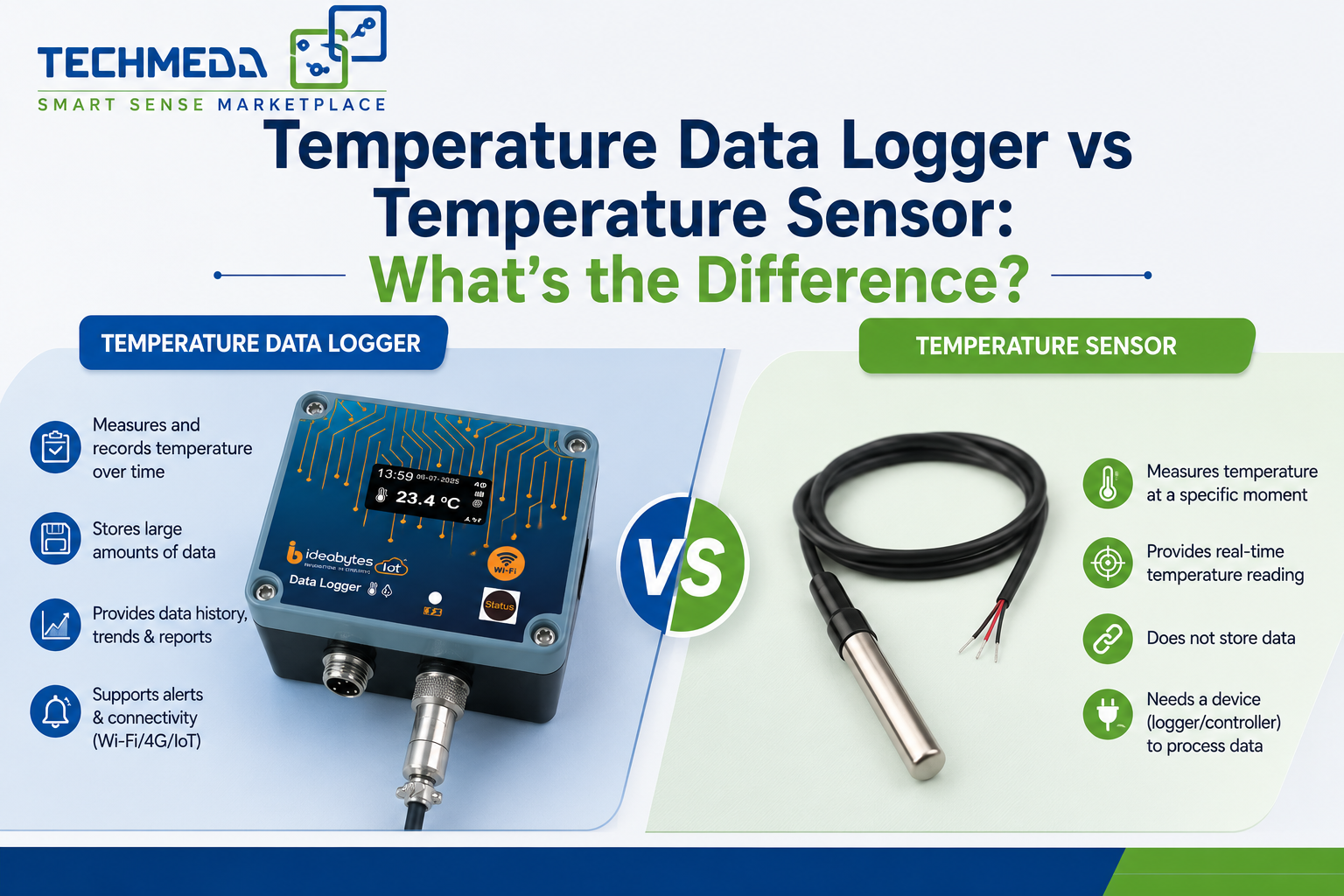
Temperature Sensor = Measures temperature
Temperature Data Logger = Measures and records temperature
| Feature | Temperature Sensor | Temperature Data Logger |
|---|---|---|
| Measures temperature | ✓ | ✓ |
| Records historical data | Usually requires another system | ✓ |
| Internal data storage | Usually no | ✓ |
| USB data download | No | Available on selected models |
| Wi-Fi monitoring | Requires connected system | Available on selected models |
| 4G/remote monitoring | Requires connected system | Available on selected models |
| Temperature alerts | Depends on system | Available on advanced models |
How Do They Work Together?
A temperature sensor can be an important part of a data logging system.
For example, in a laboratory refrigerator, a sensor measures the temperature inside the refrigerator. The data logger receives the reading and records it at a selected interval.
The stored information can then be reviewed to identify temperature fluctuations.
For facilities requiring continuous visibility, a temperature monitoring system in Delhi can combine sensors, data loggers, software, and communication technology.
Modern systems can also provide remote access and alerts when the temperature goes outside a predefined range.
Temperature Data Loggers With Wi-Fi and IoT Connectivity
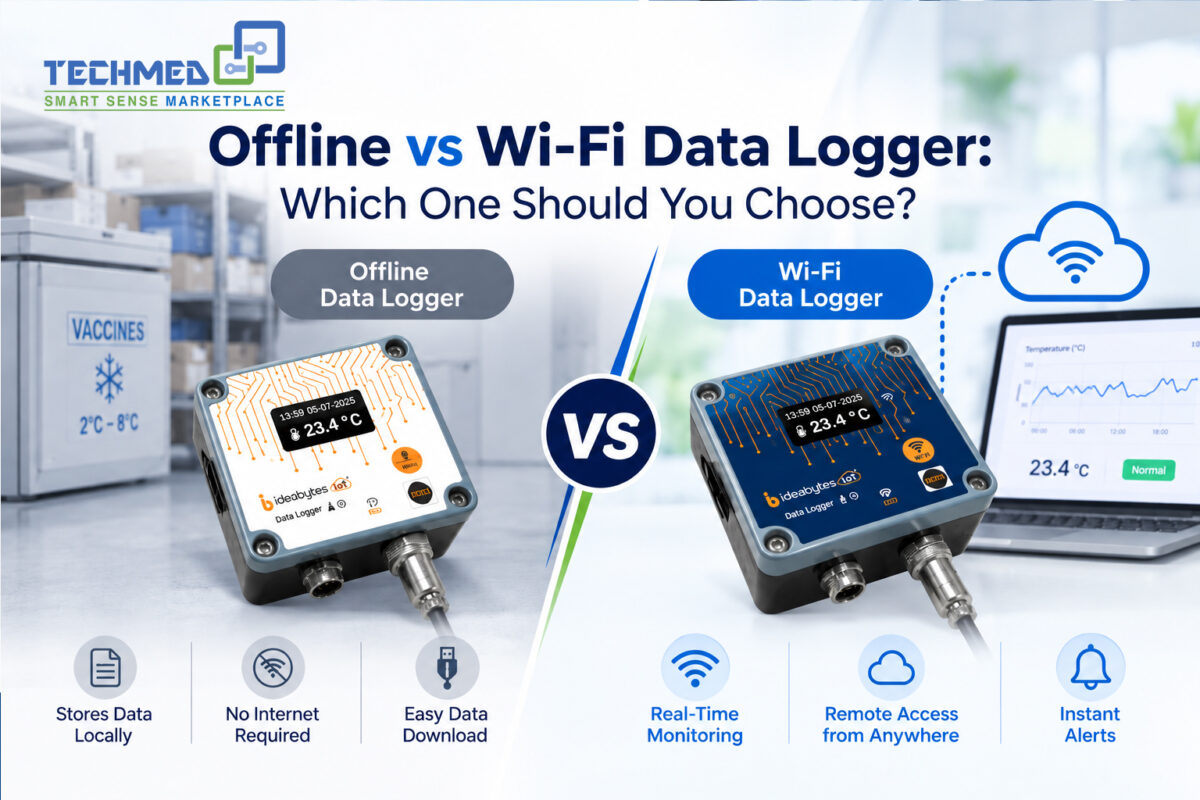
Traditional data loggers require users to collect the stored information manually.
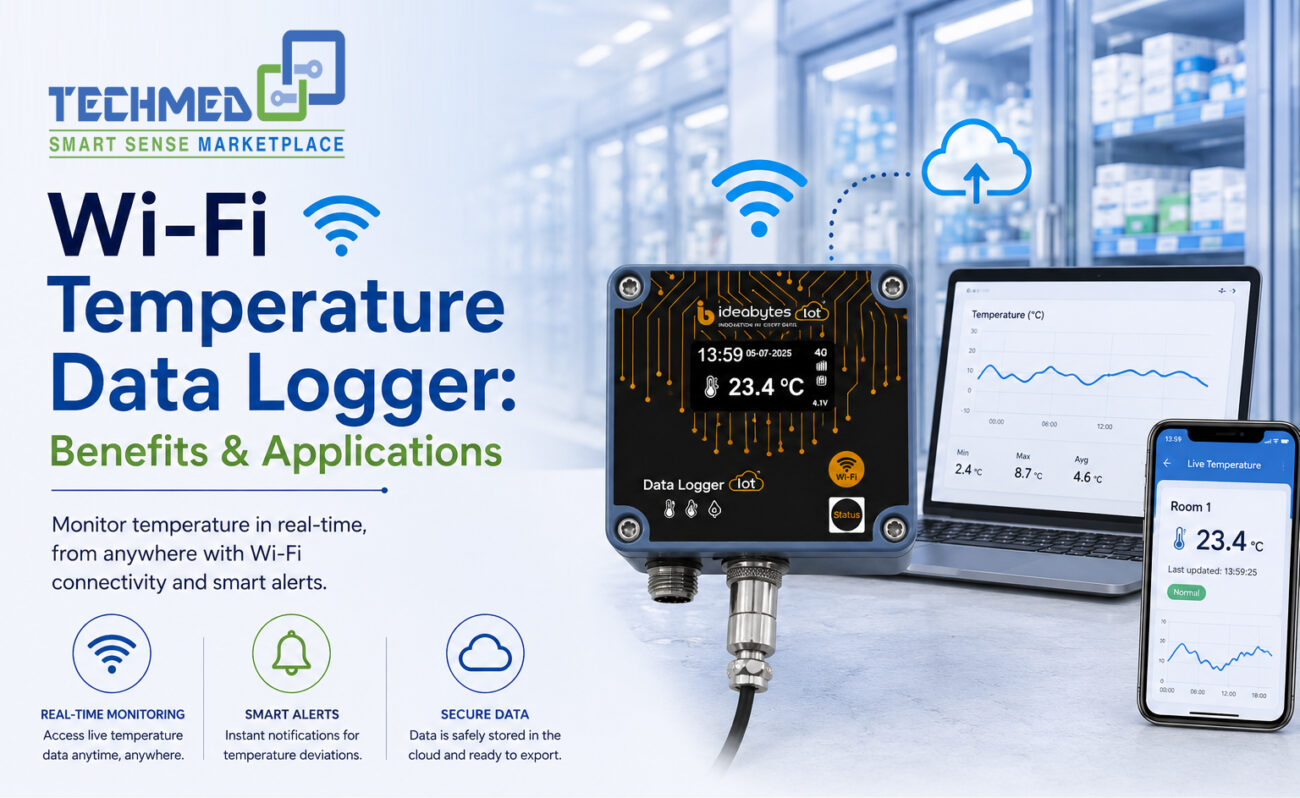
However, modern WiFi temperature data loggers in Delhi can transmit temperature readings through a wireless network. This allows users to monitor conditions without regularly visiting the equipment.
For larger facilities, an IoT temperature monitoring system in Delhi can connect multiple sensors or data loggers and provide centralized monitoring.
A remote system can also be useful when temperature-sensitive equipment is located across different rooms, buildings, or facilities.
Where Are Temperature Data Loggers Used?
Temperature data loggers are useful wherever temperature history is important.
Laboratories
A laboratory temperature monitoring system in Delhi can help monitor refrigerators, freezers, incubators, and other temperature-sensitive equipment.
Healthcare
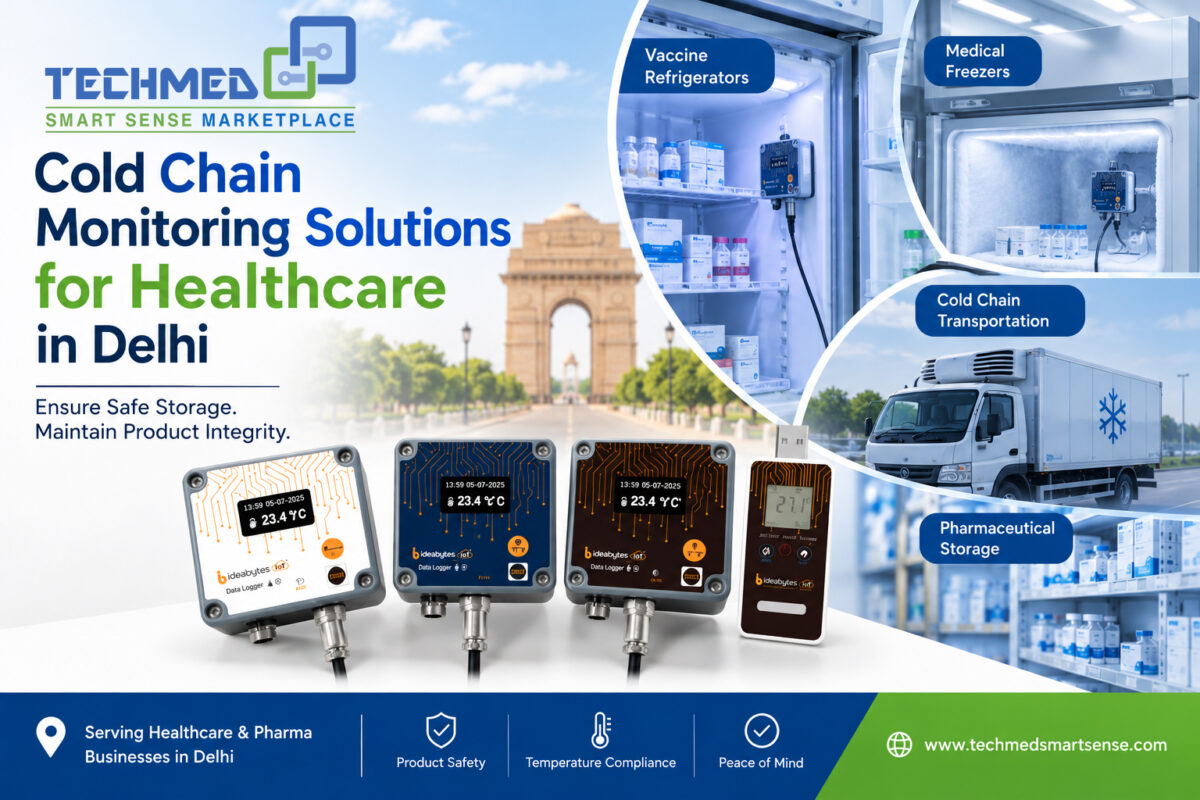
Hospitals can use data loggers to monitor medical refrigerators, storage areas, and temperature-sensitive equipment.
Pharmaceutical Storage
Pharmaceutical facilities can use temperature monitoring systems to maintain records of storage conditions and identify temperature fluctuations.
Cold Storage
Cold storage facilities can use data loggers to continuously record temperature and help identify unexpected changes.
Industrial Applications
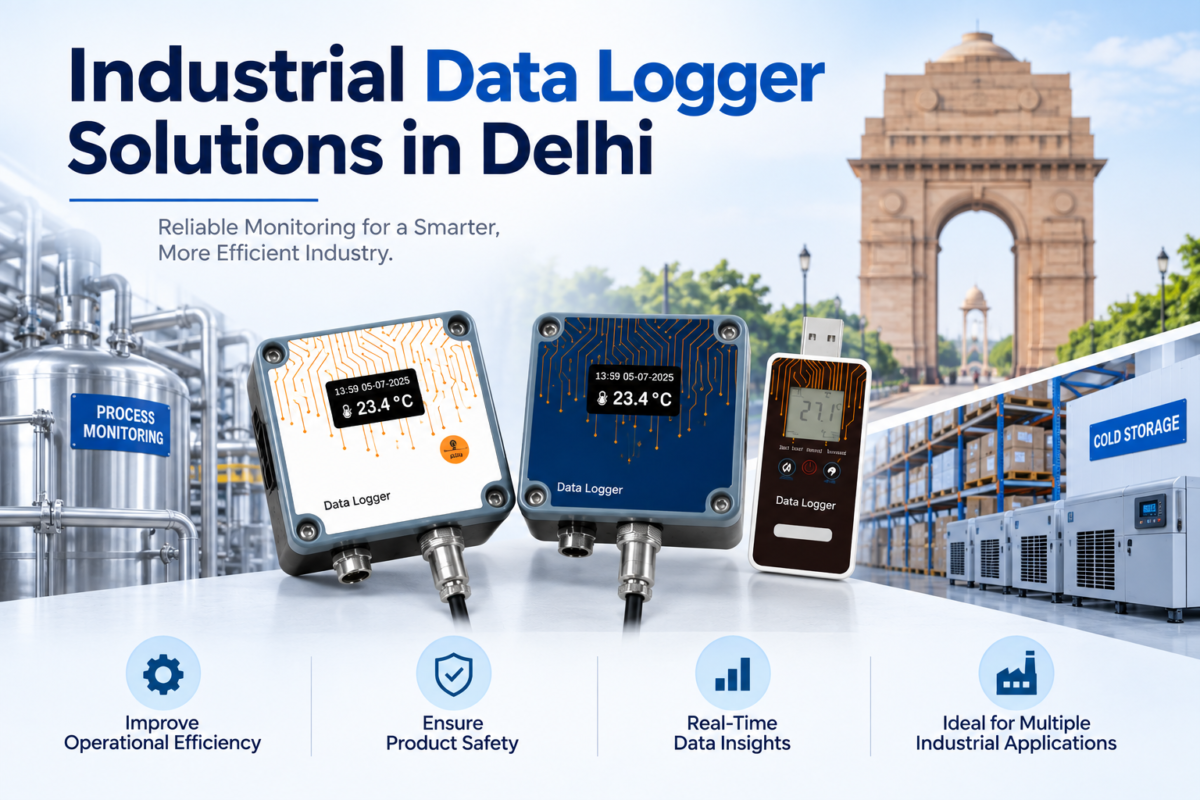
An industrial temperature monitoring system in Delhi can be used to monitor machinery, production areas, warehouses, and other industrial environments.
When Should You Choose a Temperature Sensor?
A temperature sensor may be the right choice when:
- You only need to measure current temperature.
- You already have a monitoring or control system.
- The sensor will be connected to an IoT or automation platform.
- You need temperature input for equipment control.
When Should You Choose a Temperature Data Logger?
A temperature data logger is a better option when you need:
- Continuous temperature recording
- Historical temperature data
- Automatic data storage
- Temperature reports
- USB data download
- Remote monitoring
- Temperature alerts
- Monitoring of multiple locations
If you need real-time monitoring, you can consider Wi-Fi or 4G-enabled solutions based on your application.
How to Choose the Right Temperature Monitoring Solution
Before purchasing, consider:
Temperature range: Make sure the device supports your required operating range.
Accuracy: Choose suitable accuracy for your application.
Recording interval: Check how frequently the device can record readings.
Connectivity: Decide whether you need offline, USB, Wi-Fi, or 4G connectivity.
Number of channels: Multi-channel systems are useful when monitoring multiple temperature points.
Remote alerts: Choose a connected system if immediate notification of temperature changes is important.
If you are searching for a temperature data logger supplier in Delhi, consider the application and monitoring requirements before selecting a particular model.
Conclusion
A temperature sensor and a temperature data logger are related but different devices. A sensor primarily measures temperature, while a data logger measures, records, and stores temperature data over time.
For simple temperature measurement, a sensor may be sufficient. For applications that require historical records, reporting, remote monitoring, or alerts, a temperature data logger is generally a more complete solution.
Whether you need monitoring for a laboratory, hospital, cold storage facility, pharmaceutical application, or industrial environment, choosing the right system depends on your temperature range, accuracy, recording requirements, and connectivity needs.
TechMedSales provides temperature monitoring solutions for different applications, including data logging and connected monitoring systems.