
Blog
What Is a Temperature Data Logger and How Does It Work?

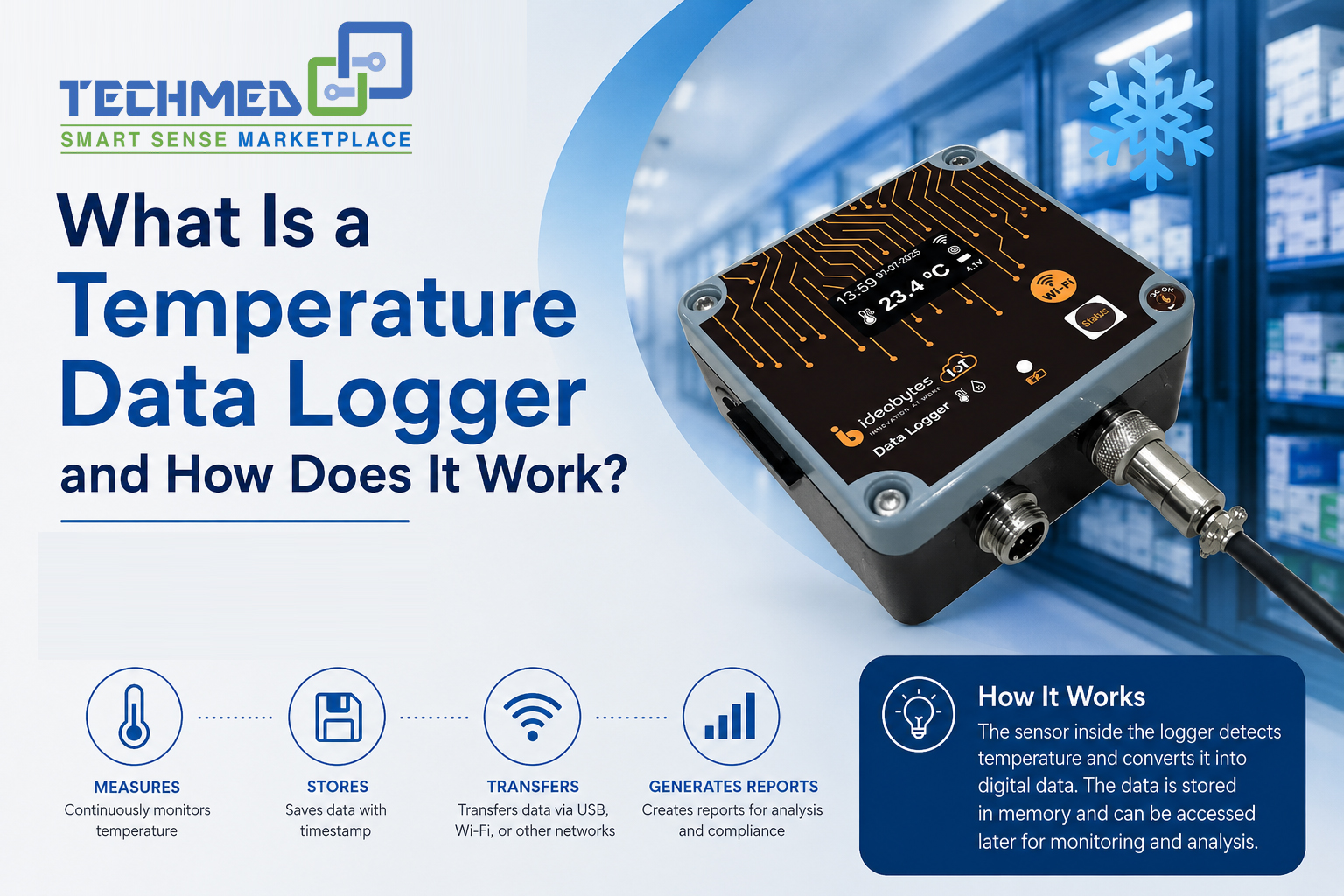
Temperature plays an important role in many industries, including pharmaceuticals, healthcare, laboratories, food storage, cold chain, and manufacturing. Even small changes in temperature can affect the quality, safety, or performance of sensitive products.
A temperature data logger is a device designed to automatically measure and record temperature over a period of time. Unlike a traditional thermometer that shows the current temperature, a data logger stores temperature readings so they can be reviewed and analyzed later.
Modern temperature data loggers can also provide real-time monitoring, remote access, alerts, and cloud-based data depending on the model.
What Is a Temperature Data Logger?
A temperature data logger is an electronic device that continuously or periodically measures temperature using a built-in or external temperature sensor.
The recorded temperature data is stored in the device’s internal memory. Depending on the type of logger, the data can later be downloaded to a computer or transferred wirelessly through Wi-Fi, 4G, USB, or other communication technologies.
For example, a pharmaceutical refrigerator may need to remain within a specific temperature range. A temperature data logger can record the temperature throughout the day and create a historical record that can be checked whenever required.
This makes data loggers useful for both temperature monitoring and documentation.
How Does a Temperature Data Logger Work?
Although different models have different features, most temperature data loggers work through a simple process.
1. Temperature Measurement
The process starts with a temperature sensor.
The sensor detects the surrounding temperature and converts the measurement into an electronic signal that the logger can process.
Different applications may use different types of sensors, such as internal temperature sensors, thermistors, RTD/PT100 sensors, or other external probes.
2. Data Collection
The data logger takes temperature readings at a predefined interval.
For example, it may record the temperature every:
- 1 second
- 1 minute
- 5 minutes
- 15 minutes
- 1 hour
The recording interval depends on the application and the model being used.
3. Data Storage
After collecting a temperature reading, the device stores the information in its internal memory.
The stored record may include:
- Temperature value
- Date
- Time
- Measurement interval
- Sensor/channel information
- Alarm or threshold events
This creates a historical temperature record instead of showing only the current temperature.
4. Data Transfer
Once the temperature information has been recorded, it can be accessed depending on the type of data logger.
Some devices use USB connectivity to transfer data to a computer. Offline data loggers may store information internally until someone retrieves it.
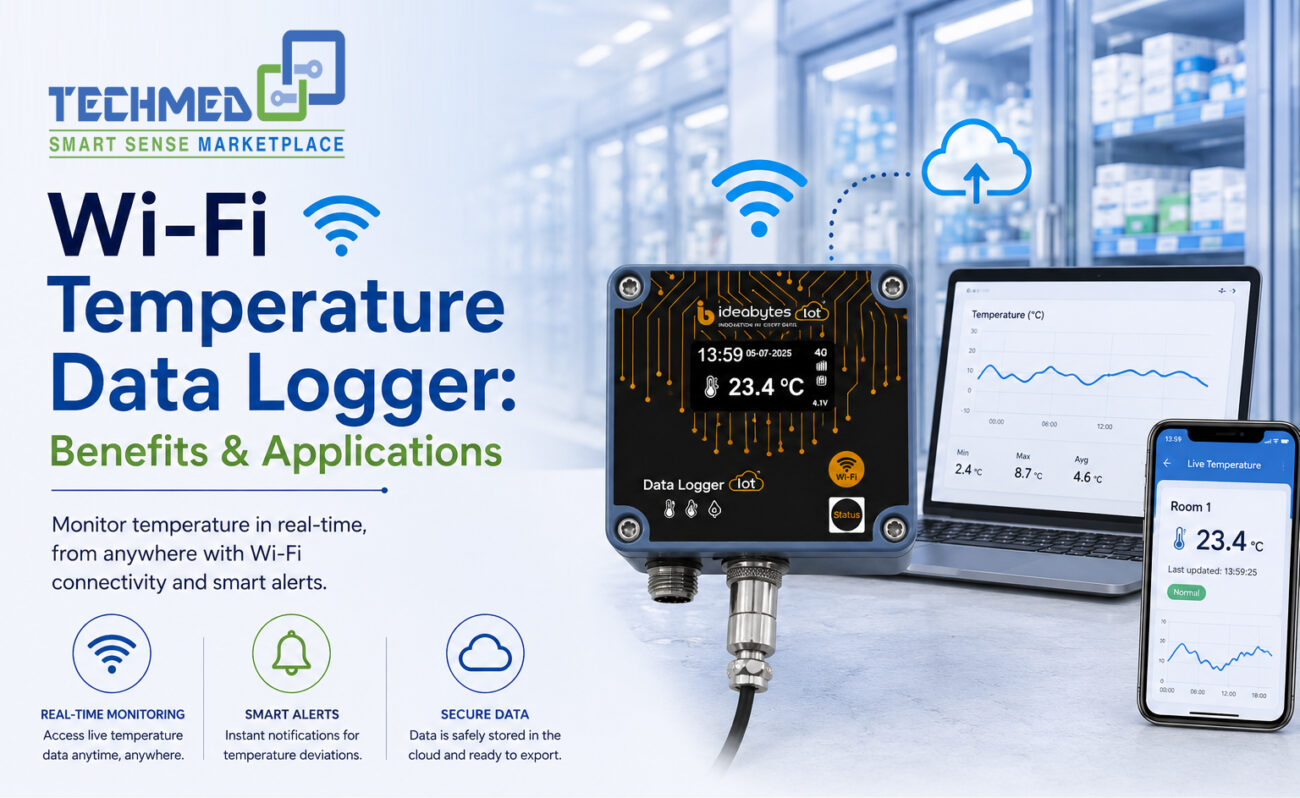
Wi-Fi and 4G/M2M data loggers can transmit readings remotely, allowing users to monitor temperature without physically visiting the location.
5. Monitoring and Alerts
Advanced temperature monitoring systems can provide alerts when the temperature goes outside a predefined range.
For example, if a pharmaceutical refrigerator is supposed to remain within a particular temperature range and the temperature rises above the set limit, the system can generate an alert.
This allows the responsible team to investigate the issue quickly.
Main Components of a Temperature Data Logger
A typical temperature data logger may contain several important components.
Temperature Sensor
The sensor measures the temperature of the environment or equipment being monitored.
Microcontroller
The microcontroller processes the measurements and manages the recording process.
Memory
Internal memory stores the recorded temperature readings.
Power Supply
Depending on the model, the device may operate using batteries, an external power supply, or both.
Communication Interface
Modern data loggers may support USB, Wi-Fi, 4G/M2M, or other communication methods for transferring data.
Display
Some models include a display that allows users to view the current temperature and other information directly on the device.
Types of Temperature Data Loggers
Temperature data loggers are available in different configurations for different monitoring requirements.
USB Temperature Data Logger
USB data loggers are convenient for applications where users need to collect temperature information and later transfer it to a computer.
They are commonly used for transportation, storage, laboratories, and other applications where periodic data retrieval is sufficient.
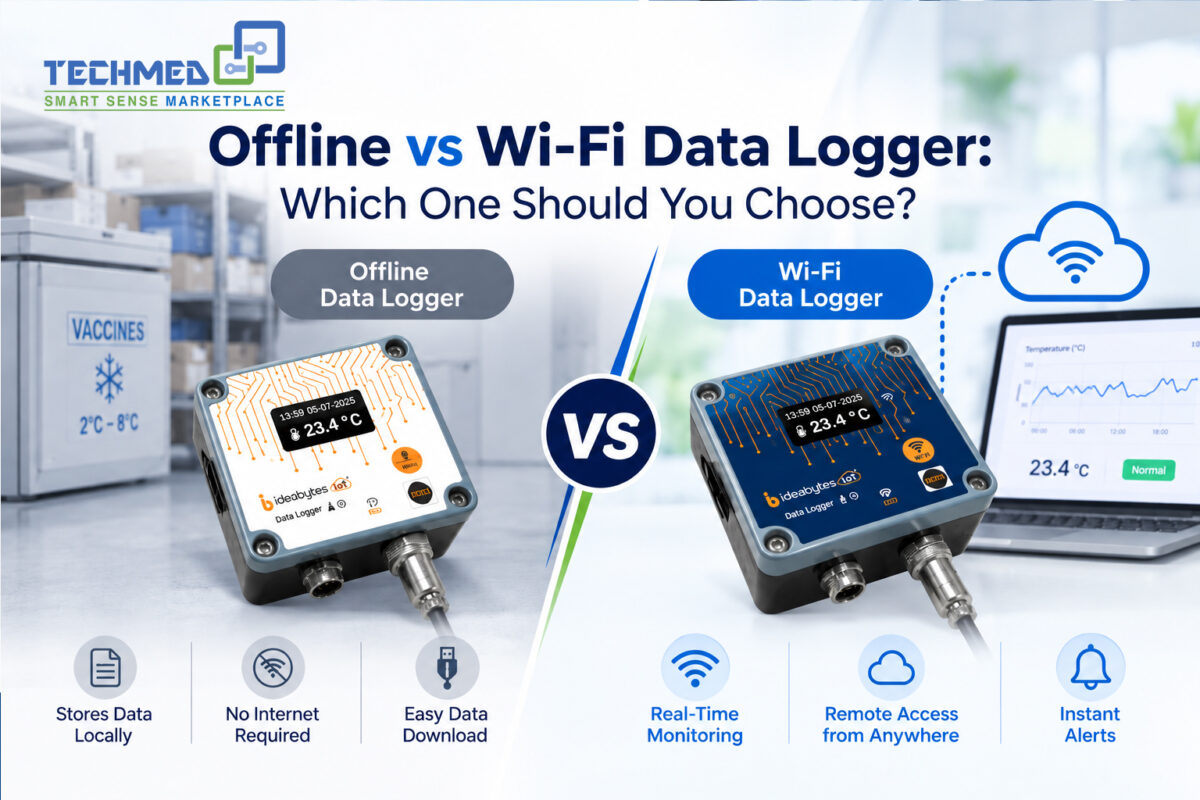
Offline Temperature Data Logger
An offline logger records temperature internally without requiring an internet connection.
The data can be downloaded or reviewed later, making these devices useful in locations where continuous internet connectivity is not available.
Wi-Fi Temperature Data Logger
Wi-Fi data loggers can connect to a wireless network and transmit temperature information remotely.
They are useful when users need centralized monitoring and access to temperature data from another location.
4G/M2M Temperature Data Logger
4G or M2M-enabled loggers can transmit temperature information using cellular connectivity.
They can be useful for remote locations, transportation, cold-chain applications, and facilities where Wi-Fi may not be available.
Multi-Channel Temperature Data Logger
A multi-channel logger can monitor multiple temperature points using several sensors or probes.
This can be useful for laboratories, industrial equipment, storage facilities, and other applications where several locations need to be monitored simultaneously.
Where Are Temperature Data Loggers Used?
Temperature data loggers are used in many industries where temperature control and historical records are important.
Pharmaceutical Storage
Medicines, vaccines, and other pharmaceutical products may require controlled storage conditions.
Temperature data loggers help record storage temperatures and identify temperature excursions.
Hospitals and Healthcare
Healthcare facilities can use data loggers to monitor refrigerators, freezers, storage areas, incubators, and other temperature-sensitive equipment.
Laboratories
Laboratories may need continuous temperature records for refrigerators, freezers, incubators, samples, and testing environments.
Cold Storage
Cold rooms and refrigerated storage facilities can use temperature monitoring systems to continuously track environmental conditions.
Food and Beverage
Temperature monitoring can help businesses maintain appropriate storage and transportation conditions for temperature-sensitive food products.
Industrial Applications
Manufacturing and industrial facilities can use data loggers to monitor equipment, processes, rooms, warehouses, and other environments.
Temperature Data Logger vs Thermometer
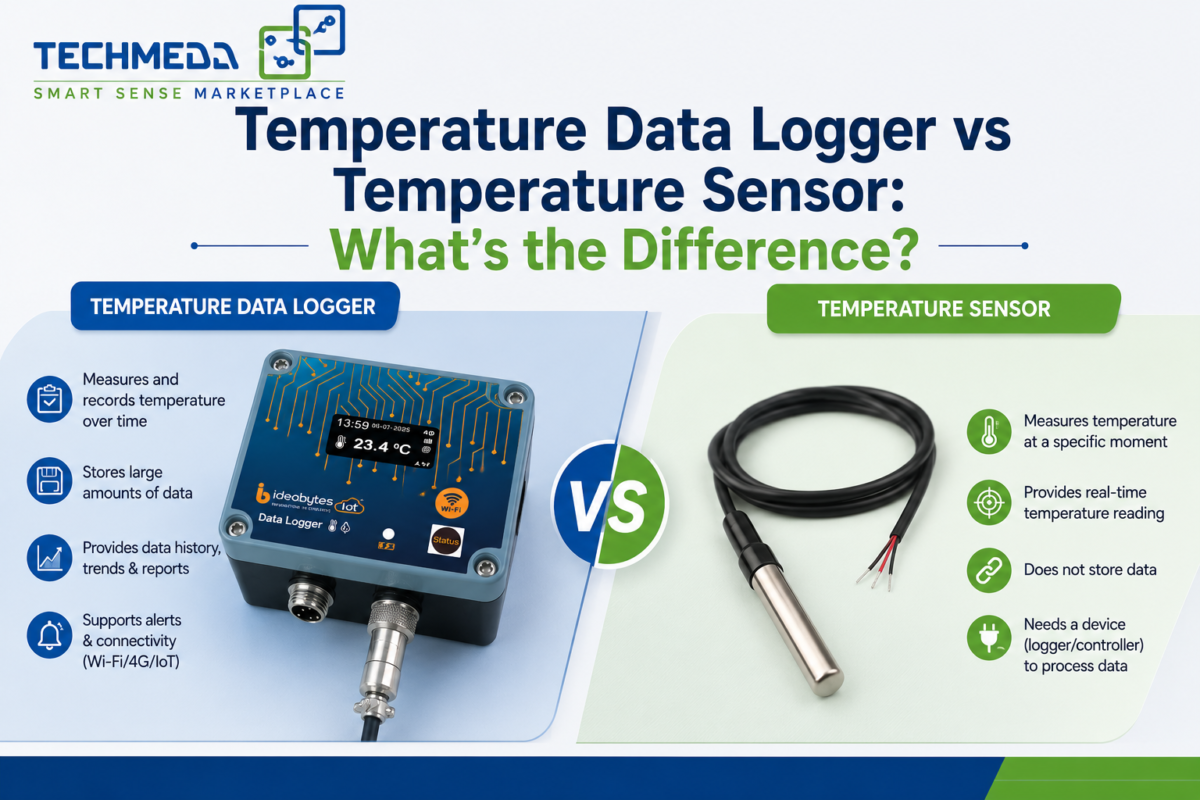
A thermometer and a temperature data logger are not the same.
A thermometer is primarily used to check the current temperature.
A temperature data logger records temperature measurements over time.
For example, if a refrigerator currently shows 5°C on a thermometer, you know its temperature at that moment. A data logger can show how the temperature changed over the previous several hours or days.
This historical information can be particularly useful when investigating temperature fluctuations.
Benefits of Using a Temperature Data Logger
Temperature data loggers offer several advantages:
Continuous Monitoring
The device can automatically record temperature at regular intervals without requiring someone to manually write down readings.
Historical Data
Recorded information provides a temperature history that can be reviewed when needed.
Better Visibility
Wireless models can provide remote access to temperature information.
Alerts
Advanced systems can notify users when temperature conditions move outside predefined limits.
Reduced Manual Work
Automatic recording reduces the need for frequent manual temperature checks.
Documentation
Stored temperature records can help organizations maintain monitoring documentation for internal processes and quality requirements.
How to Choose the Right Temperature Data Logger
The right data logger depends on your application.
Before purchasing one, consider the following factors:
Temperature Range
Check the minimum and maximum temperature the device can measure. The required range depends on your application.
Accuracy
Choose a logger with suitable measurement accuracy for your monitoring requirements.
Number of Channels
If you need to monitor several locations simultaneously, a multi-channel logger may be more suitable.
Connectivity
Consider whether you need USB, offline recording, Wi-Fi, 4G/M2M, or another communication method.
Memory Capacity
If the logger will operate for a long period, make sure it has sufficient storage capacity for the expected number of readings.
Battery Life
For portable or remote applications, battery life can be an important consideration.
Alerts and Remote Monitoring
If immediate notification of temperature changes is important, consider a logger that supports remote monitoring and alerts.
Final Thoughts
A temperature data logger is more than a device that measures temperature. It provides a way to automatically record, store, and analyze temperature conditions over time.
From pharmaceutical refrigerators and laboratory freezers to cold storage facilities and industrial environments, data loggers can help businesses maintain better visibility over temperature-sensitive operations.
The best device depends on factors such as temperature range, accuracy, recording interval, number of channels, connectivity, memory, and monitoring requirements.
For applications requiring only periodic data collection, an offline or USB logger may be sufficient. For applications requiring real-time visibility, Wi-Fi or 4G/M2M-enabled monitoring can provide a more connected solution.
TechMedSales offers temperature monitoring solutions designed for different applications, including offline, USB, Wi-Fi, 4G/M2M, and multi-channel temperature monitoring requirements.
Frequently Asked Questions
What is a temperature data logger?
A temperature data logger is an electronic device that automatically measures and records temperature at predefined intervals and stores the readings for later analysis or monitoring.
How does a temperature data logger work?
A temperature sensor measures the temperature, the device processes the measurement, and the reading is stored in internal memory. Depending on the model, the information can then be downloaded or transmitted through USB, Wi-Fi, 4G, or other communication methods.
Can a temperature data logger work without Wi-Fi?
Yes. Offline and USB temperature data loggers can record temperature without an internet connection. The recorded information can be retrieved later.
How is a data logger different from a thermometer?
A thermometer generally shows the current temperature, while a data logger records temperature readings over time and creates a historical record.
Where are temperature data loggers used?
They are commonly used in pharmaceuticals, healthcare, laboratories, cold storage, food and beverage, transportation, warehouses, and industrial applications.
What should I consider when buying a temperature data logger?
Consider the required temperature range, accuracy, recording interval, memory, number of channels, connectivity, battery life, sensor type, and whether you require remote monitoring or alerts.